

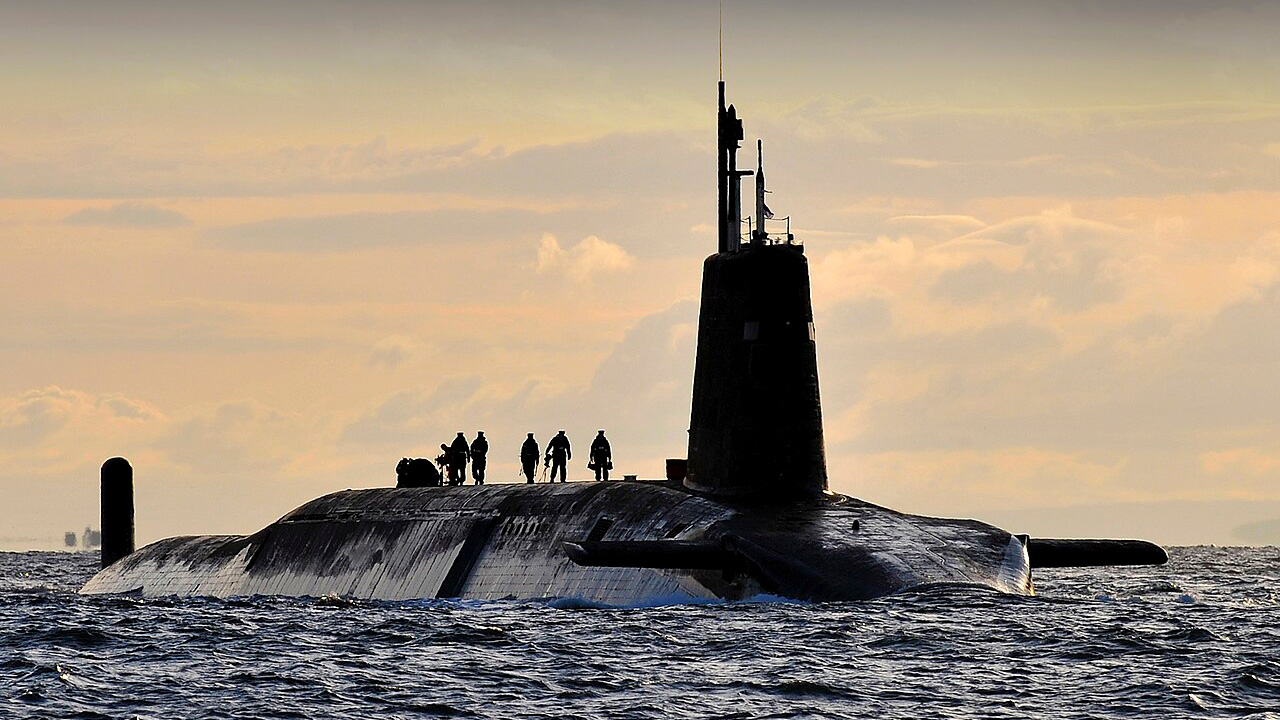
Germany is reportedly considering helping to fund Britain’s nuclear deterrent as Berlin examines closer integration with existing UK and French nuclear forces rather than developing an independent German arsenal.
Germany is reportedly considering financial support for Britain’s nuclear deterrent as part of discussions over how European states could rely more heavily on existing British and French nuclear capabilities, the Telegraph reports.
According to an exclusive report by The Telegraph, officials in Berlin are examining whether German funding could contribute towards the UK’s nuclear programme as part of a wider attempt to strengthen Europe’s nuclear deterrence and reduce dependence on the United States.
The newspaper reports that Germany’s preference is to integrate more closely with the nuclear forces already maintained by Britain and France rather than pursue its own atomic weapons programme, with one source saying Berlin has a strong interest in seeing Europe’s existing nuclear powers increase their capabilities.
A source quoted by The Telegraph said: “We have a very strong interest that the existing nuclear powers in Europe extend their capabilities.”
The reported discussions involve London, Berlin and Paris and are said to have gathered pace as European governments consider the implications of a reduced American military commitment to the continent. Germany is reportedly looking at several forms of support, ranging from financial contributions towards the British deterrent to conventional military assistance intended to protect the infrastructure that supports it.
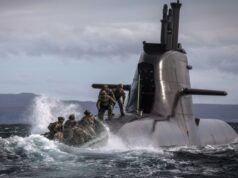
Among the more concrete options reported by The Telegraph is the possible deployment of German-operated Patriot air defence systems to important British nuclear sites, including HMNB Clyde at Faslane in Scotland, where the Royal Navy’s ballistic missile submarine force is based.
A British defence source cited by the newspaper reportedly regarded that type of conventional contribution as more credible than a substantial German role in building Britain’s nuclear submarines, saying: “The ability to contribute to the defence of Faslane is more credible, likely and appropriate.”
German officials are nevertheless also reported to have considered whether the country’s industrial base could contribute to future British programmes involving submarines, missiles or uranium enrichment. The same report notes doubts on the British side over whether German industry has the specialist experience necessary to play a major role in the construction and maintenance of the UK’s nuclear-powered submarine fleet.
Britain is currently replacing its four Vanguard-class ballistic missile submarines with four Dreadnought-class boats, which will carry the Trident II D5 ballistic missile and maintain the UK’s Continuous At-Sea Deterrent. London is also developing the Astraea nuclear warhead alongside the American W93 programme.
The UK’s deterrent remains sovereign in terms of decisions over nuclear use, but important parts of the programme depend upon cooperation with the United States. Trident missiles are manufactured in America and supported through facilities at Kings Bay in Georgia, while British and American warhead development also remains closely connected.
That dependence is reportedly one of the issues under discussion in Berlin. A security source quoted in The Telegraph’s report said: “There is thinking and talking about how the existing nuclear capabilities [such as Trident] may play a bigger role for the defence of Europe, and of deeper cooperation among European countries.”
The discussions would not give Germany control over British nuclear weapons, nor does the reporting suggest that Berlin would participate in decisions over their use. The proposals instead concern Germany contributing financially, industrially or with conventional military forces to the wider infrastructure supporting Britain’s deterrent.
Germany is reportedly holding similar discussions with France, whose nuclear forces remain entirely under French national control and include both submarine-launched and air-launched weapons. Paris has already opened a broader debate with European partners over the possible role of French nuclear forces in continental deterrence.




I don’t think we should saddle Germany with a significant cost for an arrangement which can never be entirely trusted.
Some things the UK needs to fund on its own. DNE is one of them.
I agree on the current system but I think Germany and other European nations should make a contribution to the UK to establish a nuclear triad. In turn the UK should make an air launched cruise missile on a dual share basis available to European nations like Germany, Poland and Sweden.
European NATO’s conventional military capabilities already far exceed anything Russia could hope to defeat. With the massive increase in defence spending in Poland, Germany and Nordics, Russia has no chance in a conventional fight. However we must now accept we live in a world where the US will not offer a nuclear backstop to Europe.
This will lead Russia more and more to use its nuclear weapons for political gain. Europe must be able to counter every Russian capability with one of its own. The UK is the only country that can give a replacement nuclear capability to Europe as France won’t do it for its own political reasons deeply entrenched in the French state.
If the UK doesn’t do this then countries like Poland will develop their own weapons and the Non Proliferation Treaty will fail and soon we will have dozens of nuclear armed states.
The UK already has the capacity to rapidly role out a dual use air launched nuclear cable cruise missile based on storm shadow or STRATUS. It could use its work with Germany to develop a nuclear cable hypersonic glide vehicle launched from an IRBM or develop a submarine launched cruise missile from STRATUS and use to it equip the SSN A fleet for a second sea based deterrent.
With European funding developing any of this is very easy and Britain can continue to fund its own strategic deterrent.
« France won’t do it for its own political reasons deeply entrenched in the French state. » Except French leadership Said exactly the opposite over the last few months.
France also has a history of joining up for joint projects but choosing national interests over capability or compromise. That’s not to say the French government is lying about wanting to do this, but anything that remotely threatened the independence of their nuclear programme would likely be shot down.
For instance, while it’s possible France would be willing to share their air-launched stockpile, it would probably come with some substantial conditions. That could range from French personnel maintaining and controlling the weapons at their forward bases, to requiring allies to buy Rafales to deliver them.
Compare that to the UK’s history of weapon and tech sharing. We’ll effectively give away everything in exchange for leadership, because successive governments have usually come to the decision that it’s better to be involved at the top and get those benefits, rather than the pros and cons of full independence.
Well, which part of its submarines technology or Intel uk is ready to share? Would you share your submarines position with german military ? They could not spot a Russian spy in a webex call.
As for projects, i suppose you think about fcas and eurofighter; Frankly, I’m fine with France going alone on these.
Let’s be honest, that uk/france nuclear umbrella discussion is serious with Baltics and poland only. The lack of knowledge, geostrategic thinking in germany is hopless: Jens Spahn and other german leaders want germany to lead that umbrella or having the ultimate decision decided on a rotating basis (Fra/uk/ger). Appalling.
Obviously no nation is going to share the exact positions of it’s deterrent boats with any other nation; what benefit would the Germans even gain from that?
Submarine technology? We already share with the US, with AUKUS we’ll now also be sharing with the Aussies.
This isn’t about being fine with the French joining in or doing their own thing; it’s about French willingness to compromise, and how that undermines joint efforts. For decades, that has affected most of the international projects France has joined, increasing costs and resulting in cancellations or departures.
A nuclear sharing agreement with France as the lender would likely never get off the ground.
Your own Words: « We’ll effectively give away everything in exchange for leadership ». What do you mean by everything then? Can you also provide some examples of projects affected?
9 countries are taking part to the French initiative, steering groups, exercices are in place and additional warheads delivered.
In regards to tech sharing and industrial shares. If you want a specific example, look at Eurofighter; the UK and industry funded and built the tech demonstrator while the partners dropped out, rejoined, and dropped out again.
Who knows, maybe this time a French-led project will actually carry through. The record isn’t in their favour though.
Ok so you share everything on tech and industrial but nothing on military strategy, logistics, command, doctrine, intelligence, and human resources.
Eurofighter, a jet that is so good that UK prefers buying f35.
As for project: mbda, samp/t, arianespace, fremm or nh90. Not Even mentioning non military projects. You’re welcome
Good lord, this is is a comment section, not an essay. The UK also shares those other areas, but it’s not relevant to this discussion.
Eurofighter is a last-gen platform and the UK is currently leading the next international fighter programme. That doesn’t make Typhoon bad, it just means the money is being spent on Tempest.
MBDA isn’t a programme, it was a company merger. Similar case with Ariane Space; it’s a primarily French company.
SAMP/T and FREMM were both limited cooperative programmes with the Italians; some work was shared, but both specified their own national systems.
NH90 has been a mixed bag as a product, but as a programme did actually work. Of the examples given, it’s the only one where France actually collaborated with multiple partners.
Good lord, this is is a comment section, not an essay. The UK also shares those other areas, but it’s not relevant to this discussion.
Eurofighter is a last-gen platform and the UK is currently leading the next international fighter programme. That doesn’t make Typhoon bad, it just means the money is being spent on Tempest.
MBDA isn’t a programme, it was a company merger. Similar case with Ariane Space; it’s a primarily French company.
SAMP/T and FREMM were both limited cooperative programmes with the Italians; some work was shared, but both specified their own national systems.
NH90 has been a mixed bag as a product, but as a programme did actually work. Of the examples given, it’s the only one where France actually collaborated with multiple partners.
The question was about what UK will so it is is totally relevant. Obviously not much being shared.
Arianespace and MBDA are the umbrella of multiple successful projects. SAMP/T and FREMM: not being identical does not mean ‘limited cooperative programmes’. A400M, Fremm, CSO-3… But we both know that whatever the multiple examples, you’ll stick to your stereoptypes.
No, the money is spent on F35, new order in March this year.
« France won’t do it for its own political reasons deeply entrenched in the French state. ». Except French leadership has repeatidly Said the opposite the last few months.
Every UK nuclear test since the very early ’50s has been done in the United States. There is nothing independent about this at all. Just stop with this narrative but it’s not really that hard to do because everyone else in the world can do it. Get off your checkbook and do it. Yeah the SLBm thing is also very easy to do.
just out of interest? seeing that politicians just cannot be trusted? what are the chances that the EU in some way shape or form is allowed to gain influence or a say. in the future,
just simple asking chaps.
Zero chance. :). People saying there is going to be an EU army or eu Control long nukes are just clowns. There is zero project and appetite for this.
I don’t know how the UK is going to square that with the Yanks, we have always declared our nuclear deterant to Nato ever since Polaris.
Aye, this too. Why make the Germans pay for something they a) already have and b) can never truly trust? It’d be a shitty move to agree to on our part, and someone ought to point that out to the Germans before they make yet another short-sighted decision.
Not quite correct, the nuclear deterrent of the UK is first and foremost for the UK. It is then a question for the PM if he or she wants to use it for the rest of Europe. What Germany seems to want is a fixed you launch a nuke at Germany the UK will launch a nuke back. So basically Germany has the same protection as the UK without incurring the cost of building their own infrastructure.
Yeah. The Germans pay through the nose for a paper promise.
Firstly if you really want to see Russia lash out at NATO with a full on attack, sooner rather than later just let it slip out that Germany or Poland are developing their own Nuclear weapons. And that’s before China and the USA both hit the roof about the NPT at the UN and hit everyone with the Mother of all Trade wars.
Secondly as Germany has destroyed its entire Civilian Nuclear Industry it would have to either regenerate that, build a purpose designed fast breeder tractor or buy the necessary materials from God knows who. Non of this is exactly easy, cheap or doable in anything less than 10 years.
FYI Ron the UK CASD and before that the V bomber force have been 100% dedicated to NATO tasking since 1958, it’s a formal condition of the US/UK Mutual Defence and cooperation treaty. The U.K. deterrent can only be used for National reasons in exceptional circumstances and so far that’s never happened nor even been mooted.
Neither France or the US have their Nuclear deterrent assigned to NATO, they are National assets only, the one exception is the US B61 Tactical Nucs that are held at various NATO bases on a duel key basis. Which is basically a gesture as anyone using one is pretty well on a suicide mission.
Leh is correct that the DNE is and should continue to be a 100% U.K. operated and funded sovereign capability, it would be a very dangerous idea to even suggest otherwise due to NPT and the US Treaty prohibits it.
However the fact is that due to the enormous funding required to produce the Weapons, C2C and the actual boats there isn’t enough left to actually produce the optimum force level (5 is the magic number).
If Germany is serious about financially assisting France and UK to provide a NATO deterrent then we should explore that but only via a NATO wide funding model that doesn’t breach NPT but has to be conditional on France joining the U.K in a joint NATO deterrent force.
Bottom line the funding should be sufficient to allow both of us to build and operate a 5 boat fleet plus develop a range of tactical stand off, deep strike weapons to replace the US supplied duel key B61s.
If you had a 5 boat RN and 5 boat MN SSBN force working on a joint deployment, maintenance and training schedule you can have 4 at Sea plus a 2 boat surge capability. Trust me the math works both did the calculations back in the 60’s which is why both wanted a 5 boat fleet but we never managed to fund it.
That by the way completely overmatches the Russian SSBN Force as their force is split between the Northern and Pacific fleets.
Germany has not lost its entire nuclear industry. Just check Urenco Gronau. Rumors say it takes one month to change it to Military enrichment after which you could produce one nuke per day.
Not saying it is true. But there is very substantial capability there.
Yes the German Nuclear industry was decimated post Chernobyl, but never completely killed.
Mmm have you got any idea how big a difference there is between enriching Uranium from LEU or HALEU and HEU ? It’s a massive undertaking and URENCO is majority owned by the UK and Netherlands so it isn’t going to happen. In addition to that they signed the NPT and the 2 plus 4 Treaty which allowed the reunification of Germany but bans it from acquiring its own NBC weapons.
Even if they did secretly decide to develop a bomb, HEU will only allow a Fission weapon (A Bomb), which isn’t exactly much of a realistic threat in a modern war, without Plutonium, Tritium, Deuterium and the know how you just can’t take the next step.
Hi ABC, I agree a five boat SSBN fleet would be the way to go but assuming the windows for building a fifth boat has passed (I’m not saying it has but it seems likely it soon will) what are your thoughts on a nuclear cruise missile or possibly IRBM development for the SSN A class. The USN is already following similar lines.
My rational being that a fleet of 12 SSN A could provide a very credible global nuclear prescience mission in support of Dreadnaught while being more much flexible.
Much easier for Germany and others to fund SSN A without breaking the NPT.
Funding doesn’t breach NPT (no one is passing tech or sole control of weapons to a non declared Nuclear state), nor the 2 plus 4 Treaty conditions or the German constitution.
As for a fifth RN SSBN, the window for a 5th RN boat isn’t technically impossible but it would require a single Dreadnought variant and would delay iSSN(A), so Political suicide and its probably not such a-big issue. It’s my understanding that France could and would go for producing a fifth boat if the funding was there. But their decision to build a CVN pretty well screws their defence budget for the next 15/20 years.
In practice we would have to wait to the next iteration SSBN (to replace the Dreadnoughts) in 2050’s but as the early planning for that is already in the very early stages of planning it’s doable from SSBN production but would entail a mod to the US Trident agreement. If it was anyone other than Trump that wouldn’t be an issue as the original agreement covered 5 Polaris boats.
Just remember that Nine is better than Eight and TBH it’s the harmonising of the 2 fleets schedules that really boost the deployable numbers !
Every UK nuclear test since the very early ’50s has been done in the United States. There is nothing independent about this at all. Just stop with this narrative but it’s not really that hard to do because everyone else in the world can do it. Get off your checkbook and do it. Yeah the SLBm thing is also very easy to do.
If Germany wants that, they should fund and even co-crew additional boats but under RN command. Let’s face it: is 4 enough? We struggle to crew 4 let alone 5 or 6. It does mean UK CASD becomes more of a NATO asset rather than a UK one….is that acceptable?
It’s hard to gauge from this how committed Germany wants to be. Moving patriots to Scotland would be positive & temporary but that’s very different to say funding a 5th or 6th Dreadnought. And what will they want in return? They’ve already got the nuclear umbrella.
In what precise way?
To my mind the Germans would be best alone or in concert with other European powers to produce theatre level nuclear warheads and missiles to use them under their control giving a level of retaliatory capability while adding a greater level of flexibility in this sphere to Europe as a whole with only France offering such capability and Britain doesn’t possess. It at least gives them some cards in what might otherwise be only a paper nuclear umbrella. The US would not automatically offer it and Britain, France too most like isn’t going to reliably risk their own destruction by responding to perhaps a small if devastating nuclear device being targeted at Germany or any other European Country. Doubts on that matter in the eyes of the Russians, is the only real defence it offers and holds up enough in normal times, but a desperate Russia and Putin in particular just might take that gamble if he knows failure will be his death or at best his being exported to the ICC in handcuffs at best. So more flexibility for Europe as a whole might be very useful, sending Patriots to Scotland or the like will likely only exacerbate the risk to Germany laid out above while not increasing the reliability of the umbrella noticeably.
I’m theorising they may want a nuclear capable version of one of the missiles being developed under the joint deep precision strike weapons programme. Something either ground launched or air launched that can be stationed in Germany to supplement or replace US gravity bombs with a 2,000+km range.
Yes but it’s paper thin and only £££ will change that.
A massive vote of confidence in having 2nd strike capability deterrence. As far as we know uk obligation is to provide a sub under nato control at sea. UK could always put another sub out for whatever. It’s good that there is European acknowledgement of the uk deterrence effort. Unsure how much Germany can help but some protection of faslane might be appropriate.
What does a nuke go for these days?
Ukraine if it weren’t for China I suspect.
Britain, France and Germany are just planning for an eventual withdrawal of US B-61 nuclear sharing with European allies which many see coming. Part of the continual decline of US hard power over the last two decades mirroring Britain after Suez (such as the US not presently having a single aircraft carrier available for active deployment in the Asia-Pacific with the USS George Washington transiting on its way back to port).
A credible European nuclear deterrent replacement is needed and work is starting on that with the French deploying air dropped weapons in Germany and Britain looking to a mobile land-based ballistic missile weapon to supplement Trident.
The UK needs an independent nuclear deterrent like the french have and not being reliant on the yanks. We’re paying hundreds of billions for a lemon essentially.
This goes way beyond the simple headline of Germany ‘buying into’ Trident. If you look at it through the lens of the Trinity House agreement, it actually makes a lot of pragmatic sense for both sides.
Berlin has zero appetite to develop its own sovereign nukes, but they have the serious industrial weight needed to help bankroll the shared enterprise infrastructure—which is handy given how much the UK’s new Astraea warhead programme is bound to cost. The obvious red line is keeping warhead stewardship and CASD command strictly sovereign, while collaborating on the wider industrial supply chain.
But the real win for us is the conventional breathing room. If Germany deploys Patriot batteries to cover Faslane, it takes a massive local air-defence burden off our shoulders. That frees up Navy assets and gives the Treasury the financial slack it desperately needs to properly fund the escort fleet, weapon packages, and joint deep-strike platforms.
With the budget under the pressure it is, using German capital to secure the home base while freeing up our own fleet to deploy forward seems like a pretty elegant solution.
Why put Patriot’s in the UK when they’re surely needed in Europe and especially Ukraine right at this moment? Would the UK consider buying Patriot or coproduction then with Ukraine and or US? Why not fund a SAMP/T, or CAMM-MR type deployment or even a drone based T91&T94 parked nearby? Same can be done for other bases, ports, places elsewhere.
Because Germany is spending big and has big plans for it’s military and the UK doesn’t.
You are missing the core financial and material reality here. The UK Treasury simply does not have the capital right now to buy into a completely new long-range sovereign SAM capability like Patriot or SAMP/T without further gutting the escort fleet or weapon packages. The beauty of the Trinity House framework is that it leverages existing German capability to secure a vital NATO asset at minimal cost to the UK taxpayer.
As for CAMM-MR, that programme is still years away from frontline operational maturity, and Faslane needs point-defence resilience now, not in the mid-2030s.
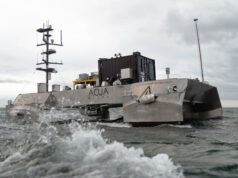
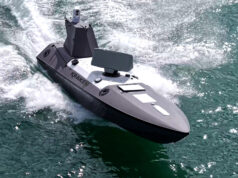
Finally, a minor correction on platforms: the Type 91 and Type 94 are autonomous maritime surface vessels (USVs) designed for naval monitoring and ASW data-links. Parking them on land to provide air defence is a total mismatch of domain and capability.
Not to be pedantic, but T91 is the missile barge, T94 is the radar picket. Quentin was quite clearly on about anchoring them offshore at Faslane and other ports as an air defence battery.
Fair point on the designations, Callum, and I take your point that Quentin likely meant anchoring them offshore despite the muddled ‘parked’ phrasing. The Type 91 as the distributed missile platform and the Type 94 as the uncrewed radar picket is correct.
However, the underlying air defence logic still doesn’t stand up. The original suggestion was to have them ‘parked nearby,’ implying a land-based application, which is a complete domain mismatch for ocean-going hulls. Even if we follow the logic of anchoring them offshore inside the Gare Loch as a static battery, it remains an incredibly wasteful use of mobile fleet assets.
Furthermore, the unique geography of Faslane heavily works against water-based sensors. A surface vessel sitting low inside a land-locked sea loch suffers from severe radar masking due to the surrounding hills. Ground-based systems like Patriot can be elevated on the terrain to secure a proper line of sight. The beauty of the Trinity House framework is that it leverages existing German capability to secure a vital NATO asset at minimal cost to the UK taxpayer, freeing up our uncrewed maritime pipeline for active fleet operations.
Sounds like Germany coming to Broke Britain’s aide more than anything. Spin baby, spin.
This could be development of a sovereign air launch system? Doesn’t have to be trident related we all have the tech to make that happen.
This is what the yanks don’t seem to understand the tech is well known and probably every developed country has the capability if they choose to pivot in that direction and develop a system.
The genie is out of the bottle(well maybe lifting the cork) everyone has realised America has changed and if it has happened once it could happen again.
We have our own sub orbital rocket companies in the uk. ESA can launch into the distant solar system. A SLBM or silo based ICBM is not beyond the whit of Europe.
Unfortunately none of the British rocket companies have solid rocket motors so they aren’t very suited to missiles.
If Germany were going all-in, The best way would be to use the French connection and combine Ariane Group’s IRBMs with a joint UK-German HGV to produce a land-based secondary deterrent, then produce an Anglo-German air-launched cruise missile as the third leg.
Ariane are already producing a 2500km IRBM and MBDA are developing an HGV for the Anglo-German DPS programme; an increase to 3000km would be all that is necessary to reach much of Russia’s population and military from the UK.
That’s no longer true, the UK is developing a solid fuelled ballistic missile in Project Night Fall with fuel manufacturing in the UK.
Except we don’t know of anyone developing the rocket motors yet. There is no central body ‘developing’ Nightfall, we just know that some contracts have been signed with unnamed companies.
Solid rockets in a lot of ways are easier than liquid, it just lights and burns, no valves and mixing, and there’s a lot more to rocketry than just the engine and fuel type.
Yes solid motors are easier than liquid but we don’t have any under development yet, unless a lot more progress is being made on Nightfall behind the scenes. Even then it will take much more expansion and evolution to reach Russia from UK soil.
If we’re doing a pan-European project anyway surely better to just make use of France’s existing policy of dual-use rocketry, which means that Ariane can produce both solid fuel space boosters, M51 boosters and anything up to that.
The motors are one of the easiest crossover points between civilian and military rockets so it does get in the way slightly.
This is excellent news. France, Britain and the financial assistance of Germany would form a nuclear force strong enough to make Russia quake. With eight Dreanought-type nuclear submarines, each capable of housing.up to two hundred nuclear warheads and and an array of French tactical nuclear weapons. NATO without the USA would have nothing to fear but fear itself!
This may be useful if the the US walks away from Nato due to friction between the US/EU and UK
We cannot totally ignore the mounting debt problems the US has (130% of GDP) causing massive cut backs either.
Undo George Osborne’s tactic of throwing the UK’s Strategic Nuke Deterrent budget into the general defence budget. Any friendly country that then wants to at have at least the possibility of having coverage of such a strategic deterrent, should then cough up some dosh towards it, but this does not cover tactical use.
Similarly any Commonwealth country or friend that wants to benefit from future UK conventional armed forces protection, can contribute towards that as well. ££££s.
Now America is an unreliable NATO member, Europe needs to develop its own totally independent (from America) nuclear deterrent system. European missiles, warheads and submarines. The number of boats could be increased to 6, hopefully keeping patrol times to 3mths. In times of increased tension the number of boats could be surged to 4 or maybe 5 to be at sea.
Ultimately the UK and the rest of the EU should be 1 country if Europe wants to compete /not be intimidated by either the USA or China – The United States of Europe.
Rejoining the EU is now a matter of defence as much as economic
Just spin, Patriot PAC-3 interception of MRBM is seen as woeful. Massachusetts Institute of Technology (MIT) professor Theodore Postol Analysis is in the range of 1-2% success rate. Destroying the Ballistic warhead is completely different to hitting the Ballistic Vehicle, hitting the warhead means a head on engagement which is harder than hitting a side on engagement. His argument is that the side on engagement severs the body but because the terminal speed is so high the warhead literally carries on to hit the ground, doesn’t say target though or if there is any deflection. But he’s saying this type of engagement is still around 1-2% success rate at best.
On top of this does Germany have sufficient batteries to deploy to the UK? They have 6 batteries currently that have not been forward deployed in maintenance or given to the Ukraine. With 8 more on order, would they be willing for 2 batteries for the UK, one for the North East of Scotland and 1 for the North East of England. It really is a crappy 1980’s design very directional. You’d want it to cover more than Faslane. Just doesn’t make sense we supply you with a €1 billion GBAD weapon system but we want access to you £20 billion a year weapon system🤔
I doubt they’re talking about intercepting Ballistic missiles, more likely ALCMs.
Dern i did an analysis of ALCM launch on the back of a Fag Packet a while ago. And seeing as TU-95 fleet has been severely degraded by the Ukraine forces its probably even better. Lets assume we get sufficient escalation warnings and we can deploy our SkySabre batteries to Conningsby, Lossie and Lakenheath and our two long range sites at Saxa Vord and Buchan. 6 are available and 6 on order. We have 2 available Type 45 with 48 Aster 30 block 1 each. We put up all available Typhoons this could be 72 but lets say 15% unserviceable thats 61 frontline, we scrape another 9 from the OCU thats 70. Loaded with 2 fuel and 6 Meteor 2 Amraam and 2 Asraam. You may question why the two Amraams these are to be used for leakers missiles or aircraft no point using Meteors for eveything. Then we come to the F-35’s. Lets assume they are working off 1 of the QE Class lets assume only 2 Sqns but we have the ability to surge 6 planes from the OCU thats 30 planes but we can only put up 20 (assuming the supply chain is shite still). So from these 20 planes 4 planes are left clean with just 4 AMRAAM-D’s and we have these picketed ahead of the Main Defence Line. QE Carrier Placed central Norwegian Coast. The remaining 16 F35B’s have 10 Amraams and 2 Asraams. This gives a total of 864 missiles from the Fighters and Type 45. This is not including the 3 Sqns of F-35A at Lakenheath which are 18 aircraft each assume 11 aircraft per Sqn in beast mode but with fuel tanks so 8 AMRAAMs and 2 Aim9x thats another 330 missiles. We have the use of all 9 RAF Tankers and most at Mildenhall lets say 11 mix of KC-135 with boom and drogue. F-15E’s have been withdrawn back to USA. Now lets look at the Russians TU-95s i wont even talk about how many missiles they carryas they all get shot down, they have 38 but more likely less. Lets assume they can put up 60% and im being really generous here so that 15 up. There all getting shot down before ALCM launch range. Tu-22m they have about 57 but reports suggest only about 27 operational lets suggest 57 but they have a serviceable rate of 50% so 28 in the strike package carrying 3 KH-32 each, 50% get shot down before weapons release as they hardly have any AWACS cover and are seen by the Stealthy F-35B Picket and E-7Wedgetail and all targetting is handled by them. This leaves 42 missiles launched. Then lets talk about the TU-160 18 inservice but only 7-9 in the active fleet 50% Serviceabilty so 4 in the strike package so 12 KH-101 each but we manage to shoot 1 down before weapons release because of there speed (maybe have a sqn of Typhoon just to look after them with just 4 meteors and 4 tankers). Thats leaves 36 ALCM, thats a total of 78 cruise missiles for the Fighter force to chase down and Type 45 to take out. The F-35Bs in Stealth mode are quarterbacking the attacks on the Bombers but as soon as the Bombers are shot down or missiles released, bombers turn back they are not needed. The Wedgetail is then helping out identification of the ALCM tracks but all the Fighters are look down shoot down all being ECRS2 or AN/APG-81 datalinked to hell. Some how i dont think many are going to get through especially if you create a few picket lines. After the air to air engagements thats still 600+ missiles to take out 78 cruise missiles Doubt you’d even need the LandCeptors. The Russians would hardly get Fighter cover as they have no Tanker support. And thats not even bringing Norway, Sweden and Finland into the game.
I still believe that we only need one nuclear system. All other options are of doubtful worth and arguably cannot be afforded. Cruise, ssm’s and air launched nuclear weapons are all open to Russia ( we assume ) misinterprating the situation., and that could be more dangerous in the future.
Oh my goodness what has it all come to 🙄
spot on jim
yeah look 2 things air power navy power 90.000 troops numbers go down ordinary staff really want 40.000 in fleet carrier air support against tanks and stuff help troops break enemy first 24 hours follows is resistence small. next is then replacing marines with regulars see up security contracters pvt security battle ship has modern use gps guided rounds be a marines best friend tanks becoming obsolete vunrable top side ww2 stug claimed more tank kills than the tiger its trajectory
nukes just think past smaller launched by see or air can be more tactical. ofcourse lack uk numbers venezuela was perfact invaded did all that plan soak up aa drones occupy there flag administer go about building support army of numbers that type thing put ye bk on the map nooooooo look litterly walked in arrest him play nice now beautiful tactic honestly lost it big time soooo sad i need some thing do 3 packs 2 steaks 4 ribeye stew tomarrow cut up ribeye need few thingd carrots mince potateos probly more gravey smells great best belast stew you could eat 3 packs 20 tesco fell in to basket had sirloin day perfact soft very tasty red onion mushroom pepper sauce nice like all seasoning beef oxo steak stuff pinch salt due it the big house
The beauty of the Trident nuclear submarine is that the way it changed first strike philosophy. In the Sixties everyone was worried about being the target of a nuclear first strike and subsequently was on continual tenterhooks with the finger on the button. The submarine with nuclear warheads changed all that. Suddenly it was not necessary to get a first strike in. The nuclear submarine bought time, time to verify and ascertain if a strike was genuine and not an accident etc. Missile silos were hopeless because the enemy invariably knew where they were. Submarines like the Vanguard and soon to be the Dreadnought, lurk hidden in the ocean depths undetected and ready to deal a catastrophic nuclear hammer blow to any opponent who may have foolishly struck first, minutes, hours, days even months later. Germany knows the value of that capability and wants some of the action, being so close to Russia.
Why does Britain’s defence need financial support from overseas?
Oh!
‘In 2024, Britain had the highest industrial electricity prices of International Energy Agency member countries…The UK’s expensive electricity is weighing on the nation…high industrial electricity prices are discouraging inbound investment…energy policy I had inherited was based on the promise that renewables are cheap, but…did not have the evidence to back it up. The hidden costs that weather-dependent power creates – backup, balancing, and building extra grid – were not being properly accounted for. What the Department was missing was a full system cost….
The findings are remarkable. The cheap power pathway saves consumers over £320 billion by 2050 – equivalent to around £540 per household per year. It would make the cost of our electricity a fifth cheaper by 2035, and almost a third cheaper by 2050’
Government is about choices…and successive governments have made the wrong choices.
We don’t have much time.
‘The possible threats range from a cyberattack on a NATO country or sending unmarked armed groups to occupy territory to a limited incursion on the alliance’s eastern flank. The time frame for any move by Russia is estimated to happen between this fall and 2029, according to the U.S. intelligence assessments.’
But the answer is staring us in the face:
‘…a shift away from the current central planning model, to a system that allocates the costs of intermittent generation to the causative generators, rather than sending a bill to the end consumer…Savings are made across four major areas:
£137 billion in network spending, thanks to a higher utilisation firm power system with supply located closer to demand
£94 billion from lower wholesale prices, thanks to the removal of carbon taxes
£67 billion in lower spend on balancing and ancillary services
£22 billion across generation subsidies and the Capacity Market’
Firm Foundations: The case for cheap and reliable power 18 August 2026
‘If we lose freedom here, there’s no place to escape to. This is the last stand on earth..perhaps there is a simple answer – not an easy answer but simple…’
Ronald Reagan
@Monro
To get to that outrageous headline saving of £320 billion, the report’s model assumes that 100% of all future network upgrades and grid balancing costs after 2029 are entirely caused by new renewables.
That is fundamentally untrue. The UK’s electricity grid is ancient and desperately needs a multi-billion-pound upgrade anyway, regardless of whether it carries wind power, nuclear power, or gas.
Much of those future costs relate to existing infrastructure. By blaming every single penny of grid investment on new wind and solar, the report overstates the true “system cost” of renewables by an order of magnitude.
The report calls for building 20 gigawatts of new nuclear power and 45GW of gas. However … nuclear power stations and massive gas plants ALSO require massive, expensive new grid transmissions to connect them to the country. The report strangely pretends that building gas and nuclear wouldn’t require new and expensive grid upgrades.
This report is a useful piece of political debate, because it forces policymakers, industry and the wider public to stop ignoring the “system costs” of weather dependent energy.
However … it achieves its eye-watering headline savings; £320 billion through highly biased statistical modeling that manipulates the data to make gas and nuclear look unnaturally cheap while making wind and solar take 100% of the financial blame for fixing the UK’s aging infrastructure.
Re: Nuclear power plants, I’m all for them.
However …
The UK Conservative led gov’s. between 2013 and 2016 are responsible for negotiating, locking in, and formally signing the highly controversial £92.50/MWh strike price. Politically, the blame or credit for the financial structure is shared across two successive administrations and their prominent leadership teams.
The Cameron coalition gov.; 2010–2015 when the deal makers were specifically Prime Minister David Cameron, Chancellor George Osborne, and Liberal Democrat Energy Secretary Edward Davey These people negotiated the commercial terms. They officially agreed to the base £92.50/MWh strike price with Électricité de France (EDF) in October 2013.
Critics heavily criticised the gov. for pegging the price at nearly double the market wholesale rate of electricity at the time. Yet Chancellor George Osborne vehemently defended the deal, famously stating that nuclear power was … “substantially cheaper than any other low carbon technology” … a claim that was heavily ridiculed by economists as offshore wind and solar prices plummeted over the following decade.
Theresa May gov. follows on after Cameron resigned following the Brexit referendum in 2016. May takes office and briefly paused the deal to review the huge costs and the national security implications of Chinese state ownership (CGN). Ultimately, May’s gov. decided to push ahead without renegotiating the price. Officially signing the final binding Contract for Difference (CfD) in September 2016, legally cementing the £92.50 consumer funded framework into British law.
A blame game followed, while the Conservatives designed and signed the exact financial package, contemporary Conservative politicians argue they were forced to scramble for high cost private/international investment because the previous New Labour governments “signally failed” to invest in baseline UK nuclear infrastructure, leaving a severe energy security gap.
However … the cross-party consensus and independent audits, including those by the NAO, point out that successive governments over-relied on a single massive project. They locked consumer bills into a 35-year, inflation-linked deal without creating flexibility for when cheaper renewable energy sources inevitably emerged.
… but the Conservatives designed and signed the exact financial package! Should we trust them?
“Outside of a dog, a book is man’s best friend … Inside of a dog it’s too dark to read.”
G Marx.
Thanks very much for your response.
Healey is set to ignore the 3% of GDP budget that is the minimum that Britain’s defence requires. The recent CIA director’s flight to Moscow may very well have been to warn Putin of the consequences of the use of tactical nuclear weapons. War may be rather closer than the present government appears to realise. An increase in Defence funding is urgently required.
The sensible move is to abandon the goal of net zero by 2050. That will release scarce taxpayers funding for defence without requiring an increase in either taxes or borrowing. This is how:
Placing firm generation assets (like gas and nuclear) closer to existing infrastructure and high-demand centres drastically limits the need for expensive new long-distance transmission lines. The current net-zero pathway forces ferocious network spending to connect remote, intermittent offshore wind farms to the grid. That has nothing to do with planned legacy energy infrastructure modernisation.
‘NESO’s Future Energy Scenarios Modelling has suggested up to 21.6 GW. We would do well not to forget that, just a few years ago, we talked about 24 GW of nuclear….Britain must rediscover the ability to build nuclear power on time and budget, if it is serious about delivering affordable power…Swift, full and decisive implementation of the Nuclear Regulatory Review would save 20%, maybe 30%, off baseline of nuclear cost. This would mean:
Allowing things like energy security and economic growth (the reasons we are doing nuclear) to be incorporated into regulatory decisions. At the moment, the needs of the country cannot be considered.
Defining what “reasonably practicable” means. Nuclear is regulated under the Health and Safety at Work Act but “reasonably practicable” has never been defined. The consequence is a ratchet of regulatory demands…seen an example where a design change was made where the cost was 100,000 times the benefit. But it went through.
Make design standardisation the golden rule. Whether we are building a foreign design, replicating a previously approved UK design, or rolling out a fleet of a new design, standardisation, rather than tinkering, should be the rule. If the regulators want a change, they should be able to prove that it’s worth. Otherwise, change = more time, more cost, for no safety benefit.
Apply the Habitats Regulations more sensibly. When £700 million for 3 separate fish protection systems at Hinkley Point C – the highest level of fish protection in the world – is still not enough, we are doing something wrong.
This is not a shot in the dark. This is a call for a return to the proven models of past nuclear deployment, enlivened and improved by innovations in technology, design, and fabrication.’
Independent report Nuclear Regulatory Review 2025
But I do agree that we certainly cannot trust any of our three major political parties regarding energy or defence. Clegg’s filibuster on nuclear in 2010 because new nuclear would take fifteen years sums up the lot of ’em…
Dangerous times.